
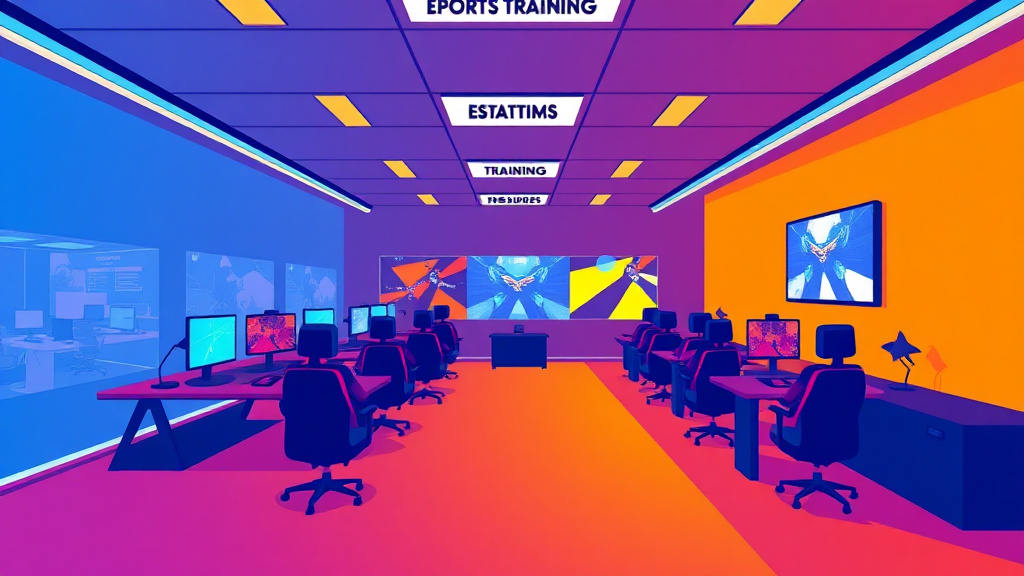
The esports industry has undergone a significant evolution, transitioning from garage-based tournaments to a billion-dollar enterprise. Today’s esports organizations are no longer scrappy underdogs—they’re professional organizations investing millions in state-of-the-art practice centers, specialized coaching staff, and performance science initiatives. This article examines how top esports organizations are mirroring traditional sports models, analyzing the advanced facilities and expert mentorship that distinguish title-contending organizations from the rest, and how these expenditures reveals about esports’ acceptance in mainstream culture.
The Development of Esports Foundation
The esports landscape has evolved significantly over the previous decade, moving away from informal gaming sessions in basements to professionally structured organizations maintaining elite training centers. Early esports teams functioned with basic infrastructure, relying on players’ personal equipment and improvised training areas. Current elite organizations have poured billions toward purpose-built facilities featuring advanced gaming technology, rapid connectivity systems, and performance-optimized workstations built to improve player wellbeing and injury mitigation during demanding training periods.
This infrastructure evolution reflects the industry’s advancement and growing competitiveness at the professional level. Modern esports facilities now incorporate elements borrowed from traditional sports, featuring coaching facilities, performance science labs, and recuperation areas. Teams understand that physical training, mental health support, and nutrition planning directly impact gaming performance. The spending on advanced facilities has proven critical for signing premier athletes, as players increasingly expect professional-grade environments comparable to those present in traditional sports, rendering infrastructure quality a competitive differentiator within premier organizations.
The evolution of esports systems extends beyond tangible venues to include robust institutional systems. Teams now hire professional coaching teams comprising game strategists, sports psychologists, and mental health professionals together with conventional esports coaches. This cross-functional strategy acknowledges that competitive success necessitates far more than mechanical skill, calling for strategic thinking, emotional resilience, and group unity. The focus on talent acquisition and expertise has emerged as essential as facility development, positioning esports as a recognized professional industry.
Looking ahead, esports infrastructure keeps evolving with emerging technologies redefining training methodologies and competitive skill advancement. Organizations are implementing artificial intelligence analytics, VR-based training environments, and biometric monitoring systems to secure performance benefits. These technology initiatives reflect esports teams’ dedication to data-driven coaching methods, echoing progress made in conventional athletics. As the industry matures, infrastructure standards will likely continue rising, creating fresh performance targets for what esports companies must provide to maintain their edge at the top tier.
Cutting-Edge Training Spaces
Current esports organizations work out of purpose-built training facilities that match conventional athletic teams in complexity and funding. These dedicated spaces provide regulated settings tailored to professional-level competition, including temperature regulation, properly designed equipment setups, and high-performance technical systems. Teams understand that athletic and cognitive abilities directly impact gameplay outcomes, resulting in significant financial investment on spaces enabling athlete development, recuperation, and team cohesion during intensive practice regimens.
Gaming Equipment and Setup
Esports professional organizations invest heavily in premium gaming hardware, guaranteeing players have access to the latest technology for optimal performance. Monitors with high refresh rates, mechanical keyboards, precision mice, and custom-built gaming PCs represent significant expenditures that substantially impact competitive advantage. Teams carefully adjust equipment settings to match individual player preferences, recognizing that hardware consistency and reliability are critical factors in sustaining top-level performance during high-stakes tournaments and practice sessions.
Beyond individual workstations, teams establish designated practice spaces with multiple gaming stations set up identically to competitive conditions. This standardization allows players to train under conditions reflecting competitive play, minimizing inconsistencies during gameplay. Reserve systems and redundant systems ensure uninterrupted training time, while support technicians regularly check and service all equipment to avoid performance loss or unexpected failures.
- High-performance monitors delivering superior visual clarity
- Purpose-built gaming PCs with premium processors and graphics
- Precision gaming peripherals optimized for esports performance
- Backup networking systems ensuring stable connectivity
- Studio-quality audio equipment for group coordination
Expert Coaching and Assistance Teams
Professional gaming teams now employ diverse coaching personnel matching traditional sports organizations. Head coaches establish strategic gameplay and team dynamics, while position-specific coaches concentrate on player skill development. Sports psychologists assist players manage pressure and optimize mental performance during competitive events. Analysts examine game footage, identify opponent strategies, and deliver analytical insights. This multidisciplinary approach ensures players get full assistance across skill, strategic, and mental aspects.
The support infrastructure extends beyond in-game coaching. Nutritionists design meal plans optimizing brain function and consistent energy during tournaments. Fitness trainers develop conditioning programs tackling the physical demands of professional gaming, encompassing eye-hand coordination and stamina development. Recovery experts recommend on rest strategies essential for sustaining top-level play. Speaking coaches support athletes cultivate public relations abilities and team dynamics. These specialized roles collectively create an ecosystem where professional gamers can achieve their best.
Focus on Talent Development
Leading esports organizations invest heavily in youth academies and talent pipelines, identifying promising players early and fostering their growth. Specialized coaching teams work with junior teams, teaching fundamental skills and competitive discipline. Mentoring initiatives connect seasoned veterans to emerging talents, enabling skill sharing and accelerating growth. These commitments ensure long-term player availability while building team culture and values that endure throughout player generations and competitive cycles.
Performance analytics track player metrics thoroughly, from reaction times to decision-making accuracy. Coaching staff employ this data to identify strengths, weaknesses, and areas for improvement with measurable accuracy. Frequent performance assessments and personalized training regimens enable continuous development. Game film review deconstruct successful and unsuccessful plays, enhancing player understanding of game mechanics. This data-informed methodology transforms subjective coaching into quantifiable, objective improvement approaches.
Financial Investment and Return on Success
The capital outlay needed to sustain elite gaming squads has achieved new peaks. Leading companies now spend millions each year in facility upgrades, coaching salaries, and talent cultivation initiatives. These substantial expenditures show competitive evolution and the strategic imperative to secure talent and physical resources. Teams that fail to keep pace financially face competitive disadvantage rivals who provide superior training environments and expert guidance. The financial payoff becomes evident through tournament victories, sponsorship deals, and expanded fan engagement that accompany success.
Competitive earnings and income sources demonstrate the concrete benefits of strategic investment in organizational systems. Championship victories convert to prize money, sponsorship payouts, and increased brand equity. Companies like T1 and FaZe Clan have produced hundreds of millions in revenue through successful esports operations. The relationship between infrastructure quality and tournament results is clear, with well-funded teams regularly winning premier competitions. This financial success confirms the revenue framework, encouraging ongoing capital spending and drawing institutional capital to the competitive gaming industry.
Sponsorship options have expanded significantly for groups possessing top-tier infrastructure and proven track records. Brands acknowledge the marketing potential of winning organizations with substantial online audiences and global reputation. Elite sponsorship deals command six and seven-figure annual contracts, effectively covering facility operational expenses. Additionally, team payroll and achievement incentives funded through sponsorship agreements permit clubs to attract world-class talent. This generates a virtuous cycle where investment drives success, success attracts sponsorship, and sponsorship enables additional investment.
The esports industry’s rapid expansion points to existing funding amounts will keep growing. Investment companies and traditional sports organizations are steadily gaining stakes in esports franchises. This influx of capital drives facility development and trainer recruitment throughout the sector. As esports reaches widespread recognition and media rights produce significant income, financial returns on franchise stakes will probably grow substantially, cementing professional gaming as a credible competitive industry.
